
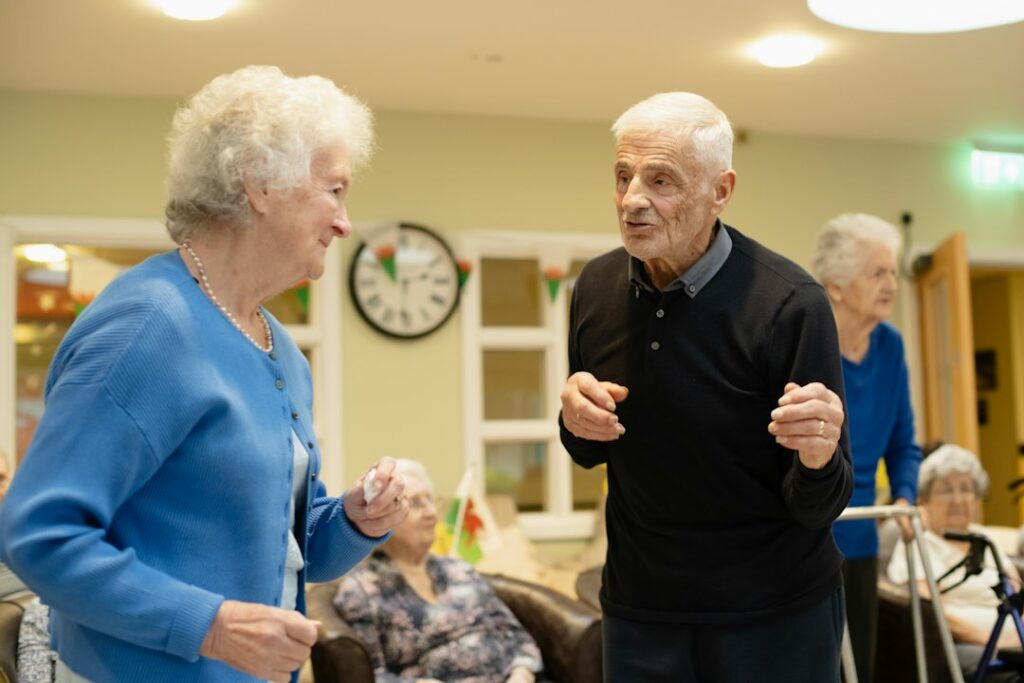
What should a fitness program for seniors in assisted living include?
A well-designed fitness program should address more than walking or general movement. It should include activities that support strength, balance, flexibility, endurance, and safe performance of everyday tasks.
Residents in assisted living have different abilities, medical conditions, and comfort levels. A useful program offers seated, standing, and modified options so that participation does not depend on being athletic or fully mobile.
Common components include:
- Strength exercises: Sit-to-stand practice, light resistance bands, hand weights, or controlled leg movements
- Balance activities: Weight shifting, heel-to-toe walking with support, or standing near a stable surface
- Flexibility work: Gentle movements for the shoulders, hips, ankles, neck, and back
- Endurance activities: Walking, seated marching, recumbent cycling, or rhythmic arm movements
- Functional exercises: Movements that resemble dressing, reaching, transferring, carrying, and getting in or out of a chair
The goal is not to train like a competitive athlete. The goal is to help residents move more safely and confidently during normal daily routines.
Why is exercise valuable for assisted living residents?
Regular physical activity can help older adults maintain muscle strength, balance, bone health, joint movement, and stamina. These abilities affect practical tasks such as walking to meals, standing from a chair, using the bathroom, getting dressed, and participating in social activities.
Movement may also support better mood and sleep. Group activities can reduce isolation by creating a regular opportunity for conversation and shared accomplishment.
Fitness programs may be especially useful for residents who have become less active after an illness, a fall, hospitalization, or major change in living arrangements. Even modest activity can help prevent further deconditioning, provided it is introduced gradually and matched to the resident’s abilities.
A common misconception is that exercise is only useful for people who can walk independently. Seated movement, supported standing, upper-body strengthening, and breathing exercises can all contribute to physical function.
How much activity do older adults need?
General public health guidance encourages adults age 65 and older to combine aerobic activity, muscle strengthening, and balance work during the week. The commonly cited target is 150 minutes of moderate activity weekly, along with muscle-strengthening activities on at least two days and regular balance practice.
That target is not an all-or-nothing requirement for assisted living residents. Someone managing arthritis, heart disease, weakness, chronic pain, memory loss, or limited mobility may need shorter sessions, more rest breaks, or lower-intensity movements.
A practical assisted living schedule might include:
- Five- to ten-minute movement sessions spread throughout the day
- Seated or standing exercise groups two or three times weekly
- Short walks in hallways or other safe indoor areas
- Balance practice near a sturdy support
- Gentle stretching after the body is warm
- Rest days or recovery periods when fatigue is significant
Some activity is generally more useful than remaining inactive, but increasing duration or intensity should be gradual.
Which exercises are appropriate for residents with limited mobility?
Residents who use walkers, wheelchairs, canes, or other mobility supports can often participate in adapted programs. The activity should focus on safe movement rather than forcing a person to perform an exercise in a standard way.
Seated options may include:
- Marching in place from a chair
- Tapping toes or extending the knees
- Reaching forward, overhead, or to each side
- Light resistance-band pulls
- Hand-grip exercises
- Ankle circles and gentle foot movements
Standing options may include holding a counter, rail, or stable chair while practicing weight shifts, heel raises, side steps, or partial squats. Sit-to-stand practice can strengthen the legs and improve transfer ability, but it should be adapted for residents who need assistance.
Residents with memory impairment may respond better to familiar music, simple instructions, demonstrations, and repeated routines. A calm environment with limited clutter can make participation easier.
How can exercise be adjusted for arthritis, osteoporosis, or chronic disease?
Exercise should be adjusted according to symptoms, medical history, and current function. Residents with arthritis may tolerate gentle range-of-motion work, water-based activity when available, or short sessions better than high-impact exercise. Movements should not be pushed through sharp or worsening joint pain.
People with osteoporosis may need to avoid forceful bending, twisting, or activities with a high risk of falling. Those with heart or lung conditions may require slower pacing, planned rest periods, and monitoring for unusual shortness of breath.
Residents with diabetes may need attention to meal timing, hydration, footwear, and signs of low blood sugar. People taking medications that affect blood pressure may feel dizzy when standing or changing position.

The exercise plan should reflect the resident’s care needs and any instructions already provided by a qualified health professional. Fitness staff and caregivers should know relevant precautions, but residents should not be expected to disclose private medical details in a group setting.
What safety practices matter most?
Safety begins with proper surroundings and realistic expectations. Exercise areas should have clear walking paths, adequate lighting, stable chairs, and enough room for mobility devices. In Clarion, PA, seasonal changes may also affect how residents move between indoor and outdoor areas. Wet surfaces, snow, ice, and cold temperatures can make indoor activity a safer choice during certain conditions.
Important precautions include:
- Wearing secure, well-fitting footwear
- Using prescribed mobility devices correctly
- Beginning with a warm-up and ending with slower movements
- Drinking enough fluids unless fluid restrictions apply
- Avoiding breath-holding during strength exercises
- Taking rest breaks before exhaustion develops
- Stopping when pain, dizziness, chest pressure, unusual shortness of breath, confusion, or weakness occurs
A resident who has recently fallen, developed new symptoms, or experienced a significant change in health may need individualized guidance before returning to group exercise.
How can families tell whether a program is working?
Progress may appear in daily activities rather than in a formal fitness score. Useful signs include standing from a chair with less assistance, walking farther before tiring, reaching for clothing more easily, participating longer in meals or social events, or feeling more confident during transfers.
Attendance alone does not show whether a program is appropriate. A resident may attend regularly but become overly fatigued, frustrated, or sore afterward. Staff observations and resident feedback should both be considered.
A good program also respects choice. Some residents prefer walking, while others enjoy music, seated exercise, gardening-related movement, stretching, or simple strength routines. Enjoyment matters because an activity that feels manageable is more likely to become part of a regular routine.
What questions should residents and families ask?
Before joining a fitness activity, residents and families may want to ask:
- Is the class seated, standing, or a combination?
- Are rest breaks built into the session?
- Can exercises be modified for walkers, wheelchairs, arthritis, or balance limitations?
- What happens if a resident becomes dizzy or tired?
- Is the activity supervised appropriately?
- Are new residents screened for mobility or safety concerns?
- How are individual restrictions communicated to the people leading the activity?
- Can family members receive general updates about participation and progress?
The most useful program is not necessarily the most strenuous. It is one that is consistent, adaptable, safe, and connected to the movements residents need for everyday life.
