
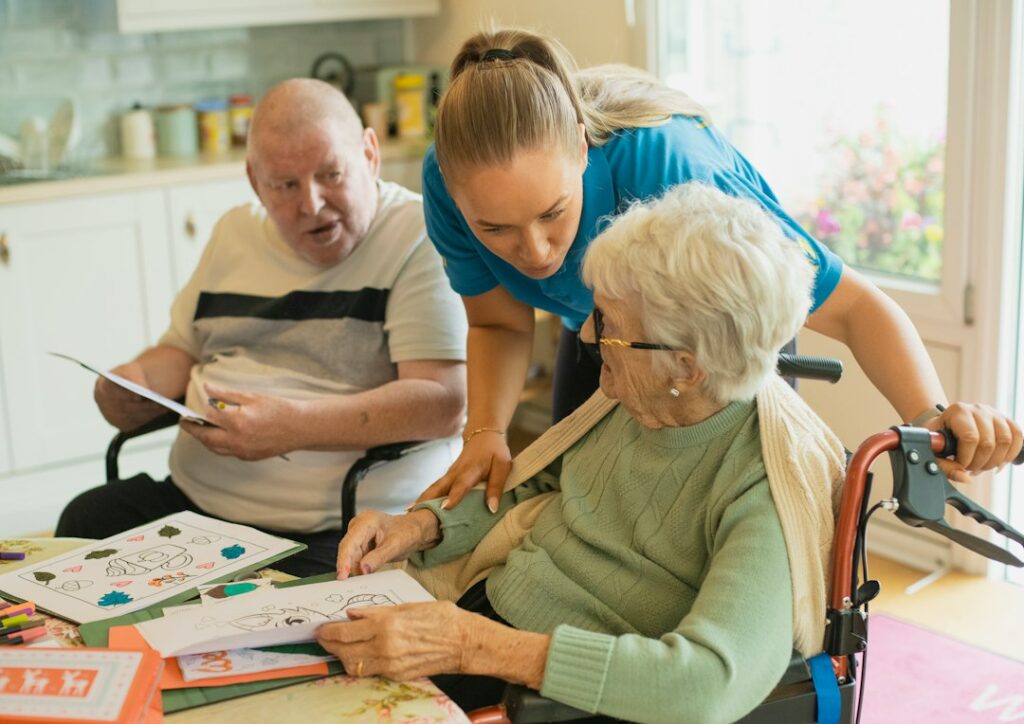
What does it mean to engage with assisted living events?
Engaging with an assisted living event means taking part in the community’s daily life rather than simply visiting during a private family meeting. Events may include meals, music, exercise sessions, educational programs, holiday gatherings, games, crafts, outdoor activities, or resident-led discussions.
Family participation can help a loved one feel connected and supported. It also gives relatives a clearer understanding of the community’s routines, relationships, interests, and approach to daily care.
A family member does not need to attend every event. Consistent, thoughtful participation is usually more helpful than trying to be present for everything.
Which events are usually appropriate for family members?
Most assisted living communities offer a mix of resident-only activities and events that welcome visitors. The activity calendar or staff can clarify whether family participation is expected, optional, or limited.
Common family-friendly events include:
- Shared meals or special dinners
- Holiday celebrations and seasonal gatherings
- Musical performances and sing-alongs
- Resident birthday celebrations
- Exercise, walking, or stretching programs
- Art, craft, or gardening activities
- Educational talks and discussion groups
- Game afternoons and recreational programs
- Outdoor gatherings during suitable weather
- Family meetings about community life or care planning
Some events may be designed primarily for residents who need a quieter setting or more individualized support. Respecting those boundaries helps preserve the purpose of the activity.
How should a family member prepare before attending?
A short conversation with staff can prevent confusion and make the visit more comfortable. Ask about the event’s purpose, expected length, location, noise level, and whether visitors should bring anything.
Preparation may include:
- Checking whether advance notice is required
- Confirming the start and end time
- Asking whether children or additional guests may attend
- Learning whether food will be available for visitors
- Bringing weather-appropriate clothing for outdoor activities
- Considering mobility, hearing, vision, or memory-related needs
- Planning transportation and enough time for a calm arrival
In Clarion, PA, seasonal conditions may affect outdoor gatherings, walking activities, and travel plans. Cold weather, snow, wet surfaces, and changing daylight can make indoor alternatives more practical during parts of the year. Families should allow extra time when roads or walkways may be affected by winter weather.
How can a family member participate without taking over?
The most helpful role is often that of a supportive guest. Join the activity, follow the instructions, and allow residents to maintain their independence. A relative may be able to play a game, help with a craft, listen to music, or simply sit nearby and talk.
Avoid directing the entire activity unless staff specifically asks for assistance. Taking over can unintentionally make residents feel observed, corrected, or treated like children.
Helpful participation may look like:
- Asking, “Would you like company during this activity?”
- Letting the resident choose whether to join
- Offering assistance only after asking
- Allowing extra time for responses or movement
- Including nearby residents in a natural, respectful way
- Applauding performances without demanding participation
- Following staff guidance about safety and privacy
If a loved one declines an event, that decision should generally be respected. A person may be tired, uncomfortable, overwhelmed by noise, or simply uninterested in that particular activity.
What if the resident has memory loss, hearing loss, or limited mobility?
Family members can make events more accessible by adjusting expectations and reducing unnecessary pressure. A person with memory loss may enjoy familiar music, simple games, or a short visit even if the activity is not completed as planned.
For someone with hearing difficulty, sitting where the person can see speakers may help. Face-to-face conversation, reduced background noise, and clear but natural speech are often more effective than speaking loudly.

For limited mobility, check that seating, pathways, entrances, and restrooms are reasonably accessible. Do not move mobility equipment without permission, and avoid blocking walkers, wheelchairs, or emergency routes.
Some residents benefit from attending for only part of an event. Leaving early is not a failure; it may be the right choice if the person becomes tired, anxious, or overstimulated.
How can family members build relationships with other residents?
Friendly conversation is welcome, but privacy and personal boundaries matter. Begin with simple topics such as the activity, music, weather, hobbies, or the meal. Let the resident decide how much to share.
Avoid asking intrusive questions about health, finances, family conflict, or why someone lives in assisted living. Do not photograph or post pictures of other residents without permission from the individuals involved and, when appropriate, the community.
A family member may become familiar with residents who regularly attend the same events. That familiarity can add warmth to the community, but it should remain respectful and never replace the resident’s own family relationships or staff support.
Should families bring food, gifts, or activities?
Sometimes, but arrangements should be made in advance. Food may need to meet dietary, allergy, texture, or storage requirements. Homemade items may not be suitable for group distribution if ingredients are unknown or if the community has food-safety rules.
Gifts should be modest and appropriate for the setting. Useful possibilities may include seasonal cards, shared craft materials, large-print puzzles, or music selected with staff approval. Avoid items that create clutter, tripping hazards, strong odors, or confusion with another resident’s belongings.
If bringing an activity, choose something flexible and easy to stop. A short card game, familiar songs, simple coloring project, or conversation based on family photographs may work better than a complicated program requiring sustained attention.
What questions can family members learn from attending events?
Events provide information that may not appear in formal care discussions. Families can observe whether their loved one seems comfortable, included, tired, engaged, or uncertain. They may also notice how residents interact with one another and how staff respond to questions or changing needs.
Afterward, consider asking:
- Did the activity match the resident’s interests?
- Was the environment too noisy, crowded, or fast-paced?
- Did the resident need more assistance than expected?
- Did the resident enjoy social contact or prefer a shorter visit?
- Were seating, lighting, and temperature comfortable?
- Did staff communicate clearly and respectfully?
- Would a different time of day work better?
These observations should be shared privately with appropriate staff rather than discussed in front of other residents.
What should family members do if an event raises a concern?
A concern should be described calmly and specifically. Instead of saying that an event was “poorly managed,” explain what happened, when it happened, and how it affected the resident.
For example, a family member might report that a resident could not hear instructions, that a walkway was difficult to navigate, or that the person appeared distressed after remaining in a crowded room. Specific information is easier to evaluate than a general complaint.
Safety concerns, medication questions, injuries, unexplained changes in behavior, or possible neglect require prompt communication through the appropriate care and administrative channels. Family members should also keep their own notes when an issue is repeated or difficult to explain.
How often should a family member attend?
There is no universal schedule. The best pattern depends on the resident’s preferences, health, energy, transportation, and family circumstances.
A relative who cannot attend in person regularly may still participate through shorter visits, shared meals, seasonal events, cards, letters, or planned video conversations if the resident finds those useful. Reliability matters more than frequency. A predictable visit can be reassuring, particularly when the resident has difficulty remembering dates or managing unexpected changes.
Participation should support the resident’s quality of life, not create pressure to perform, socialize, or appear cheerful. The most meaningful involvement may be a quiet conversation before an activity, a shared cup of coffee, or sitting together while others take part.
